

Listen to the article
China has claimed to have developed a new nuclear weapon 200 times more powerful than the bombs that devastated Hiroshima and Nagasaki.
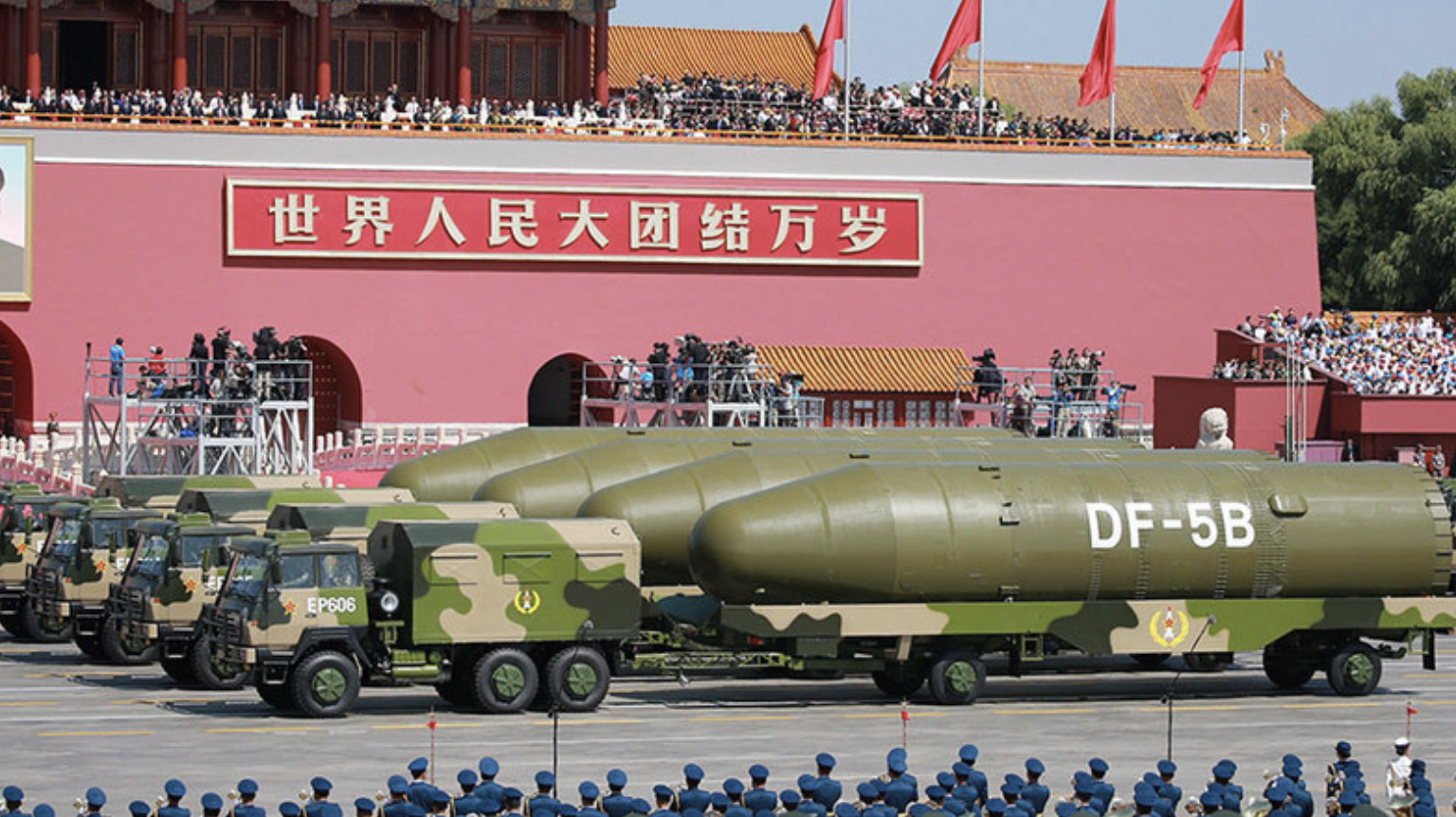
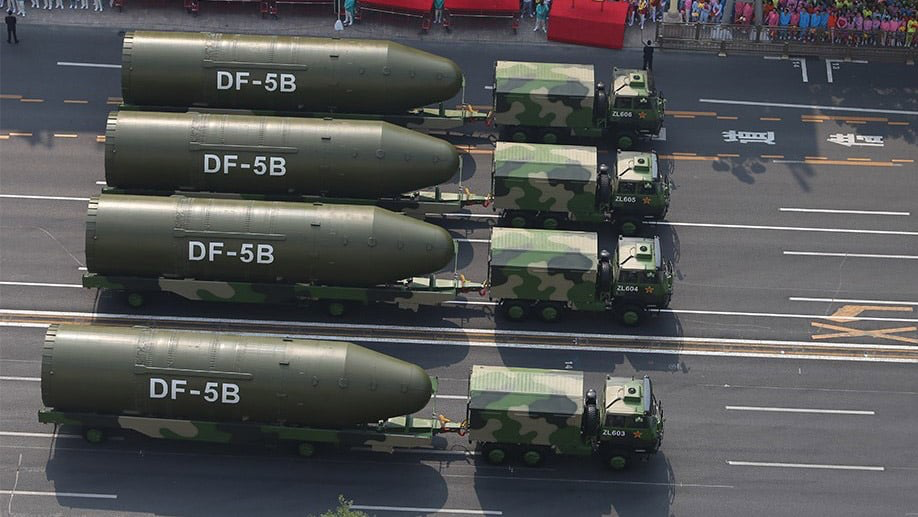
The DF-5B missile is said to have a range of 7,500 miles, meaning it is capable of reaching Europe and the United States from launch sites in China.
Chinese state broadcaster CCTV recently shared details of the upgraded intercontinental ballistic missile (ICBM), with information previously having been closely guarded.
The Chinese-made DF-5B ICBM represents significant progress in the country’s missile technology from the earlier DF-5 model developed during the Cold War, according to Global Defence News.
The weapon’s Multiple Independently Targetable Re-entry Vehicle (MIRV) technology enables a single missile to carry and release multiple nuclear warheads capable of striking different targets across a wide area.
The original DF-5 was equipped with only one warhead, but the DF-5B can reportedly carry up to 10, significantly boosting its strike capability.
Chinese journalist Li Zexin wrote on X that the DF-5B can carry a nuclear warhead equivalent to three to four million tons of TNT, which he said is 150–200 times more powerful than the nuclear bombs the US dropped on Japan in the Second World War.
China claims the missile has a maximum range of 12,000 km (7,460 miles) – enough to strike the continental United States and western Europe – and is accurate to within 500 metres (1,600 feet), a critical factor according to modern military doctrines.
The missile is “32.6 metres in length, with a diameter of 3.35 metres and a launch weight of 183 tonnes”.
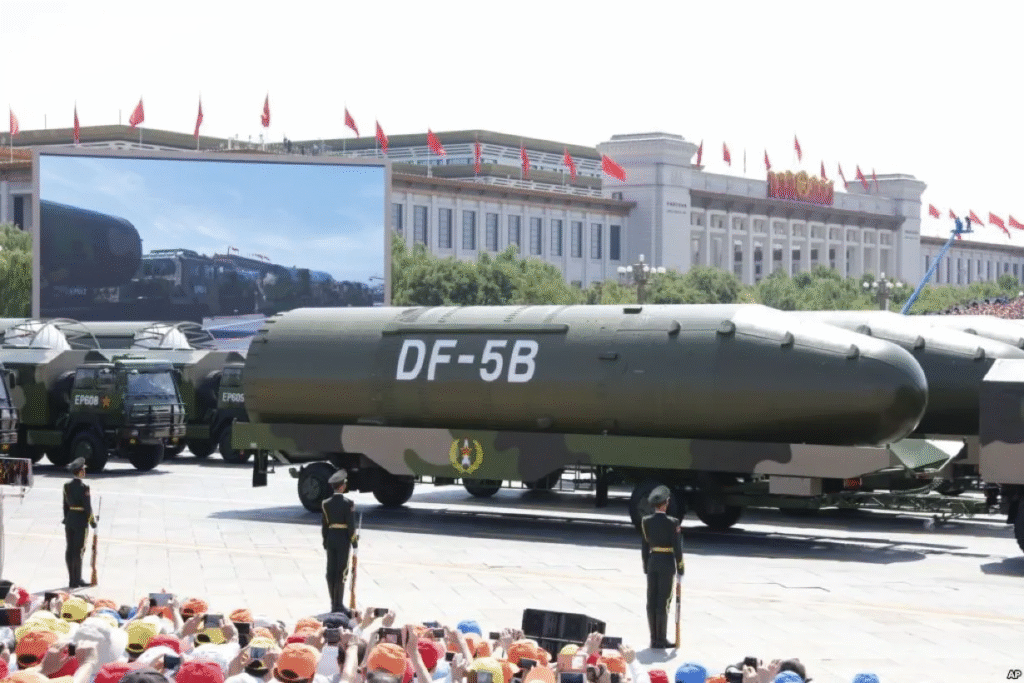
The Hiroshima bomb had a yield of around 15 kilotons (15,000 tons), while Nagasaki’s was approximately 25 kilotons (25,000 tons), according to the World Nuclear Association.
Each DF-5B warhead operates independently, making interception more difficult for missile defence systems.
It is not known why Beijing chose to release details of its “first-generation strategic ICBM”, but it may be a bid to demonstrate its military strength and deter potential or perceived threats.
China raised concerns in September last year when it revealed it had carried out a rare ICBM launch in the Pacific Ocean.
The missile, which was carrying a dummy warhead, was launched by the People’s Liberation Army Rocket Force and “fell into expected sea areas”, according to a statement issued by the Chinese Ministry of Defence.
It was a “routine arrangement” in China’s “annual training plan” and not directed at any specific country or target, the ministry said.
The Pentagon stated that China had notified it of the test launch, welcoming the advance notice as “a step in the right direction” in reducing the risk of “misperception and miscalculation”, according to a report from Reuters.
China’s PLA Rocket Force oversees the country’s conventional and nuclear missiles. It has been tasked with updating China’s nuclear forces in response to recent developments, including improved US missile defences, enhanced surveillance capabilities, and strengthening alliances.
