

Listen to the article

Seeking a deal between the US and Ukraine on critical minerals that heavily favours the Trump administration could prove detrimental in the long term, a leading resource expert has warned.
Daniel Litvin, a Visiting Senior Fellow at the London School of Economics (LSE) and CEO and Founder of Resource Resolution, highlights that the history of major resource agreements is rife with examples of deals being renegotiated or annulled without compensation. This often occurs when host countries and their populations perceive foreign entities as excessively profiting at their expense.
In an interview with National Security News, Litvin said that earlier drafts of the deal between the Trump administration and Ukraine suggest a transactional approach by the US, appearing to extract maximum benefit from a critical minerals agreement. He noted that the current pursuit does not resemble a win-win arrangement and raises the question of whether it constitutes exploitation.
Greater US urgency for critical minerals as China retaliates against US tariffs
US President Donald Trump has aggressively advanced former President Joe Biden’s pursuit of metals and minerals in resource-rich countries, shifting the strategic focus from clean energy to military use.
Urgency has grown since China imposed export restrictions on rare earth minerals in response to the US President’s tariffs on Chinese goods, tightening the supply of critical minerals to the West. This move is seen as the latest demonstration of China’s ability to weaponise its dominance over the mining and processing of these resources.
China produces 90 percent of the world’s rare earth minerals, while the United States reportedly has only one operational rare earth mine, with the bulk of its supply originating from China.
Litvin remarked that seeking such deals is not new; what has changed are the tactics and techniques employed by the Trump administration to gain control. He described the proposed Ukraine deal as highly unusual in scope, as is the potential deal with the Democratic Republic of the Congo (DRC), which appears to centre on obtaining minerals in exchange for providing security.
“That’s not a typical approach. In a sense, the most obvious recent parallel is the Wagner Group, which in many parts of Africa has reportedly offered security in return for access to minerals. So, there are significant questions about the tactics being used,” he said.
He also questioned the US assertion that the involvement of American businesspeople could provide a security guarantee for Ukraine in the absence of troops or tangible military protection.
“If America is very successful in helping to extract Ukraine’s critical minerals near any Russian-controlled territory, I think the mere presence of American businesspeople on the ground seems a weak security guarantee,” Litvin said.
Middle East and Africa are littered with examples of rewritten mineral deals
Litvin warned that the US’s current approach to pursuing a deal with Ukraine—by pressing home its advantage—may not serve it well in the long run.
“Perhaps the big question,” he said, “is how palatable this would be from Ukraine’s perspective. If it’s not palatable to Ukraine, how sustainable is such a deal in the long term?”
US negotiators, Litvin argued, need to consider that the history of resource agreements suggests securing minerals for the long term is not about acting like a strongman and extracting the maximum possible benefit immediately.
“The way to secure resources for the long term is to strike deals that bring—and are seen to bring—sufficient local and national economic benefit, and that are conducted in an environmentally and socially responsible manner. That’s how you gain local support for these types of resource agreements,” he said.
There are many examples in the mining industry, he noted, of foreign companies—Western and otherwise—having done deals in parts of Africa that are viewed by local populations and governments as unfair.
“They see these companies extracting too much profit and not returning enough,” Litvin said.
This perception of unfairness, he added, is leading to significant challenges to Western companies’ ownership of resources in Africa.
Deal is possible between US and Ukraine, but requires long-term thinking
Litvin says a win-win deal is possible between the US and Ukraine—if all parties can adopt a long-term perspective.
He cites the 50-year partnership between diamond company De Beers and mineral-rich Botswana as a successful model. That deal has been periodically renegotiated to deliver increasing benefits for the country while continuing to serve De Beers’ interests, he noted.
“I think a deal between the US and Ukraine,” he said, “needs to be thought through from a long-term perspective—not in terms of months or even years, but decades. It must benefit both sides over the long term. It should focus not just on who controls and profits from the mineral extraction, but also on the development of associated industries—refining, processing, potentially parts of the electric vehicle supply chain, and other related sectors. And it needs to be done in an environmentally and socially sustainable way.”
Negotiations between Washington and Kyiv resume
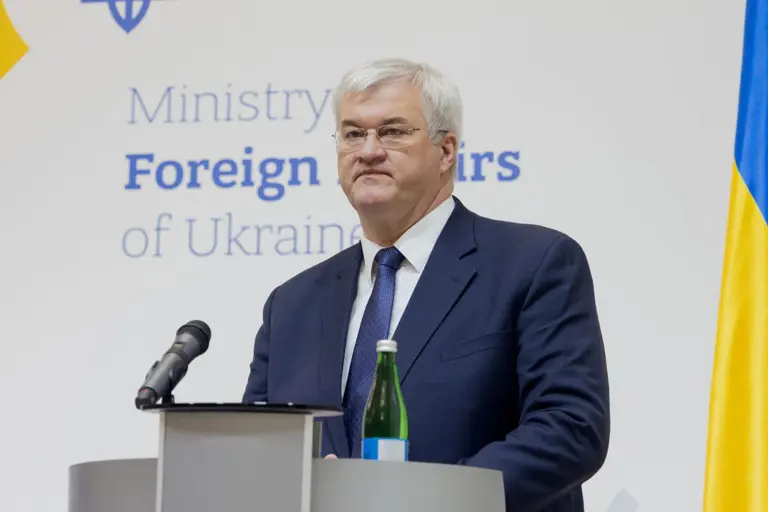
A Ukrainian delegation will be travelling to Washington later this week to continue negotiations with the Trump Administration on a critical minerals deal. Ukrainian Foreign Minister Andrii Sybiha told the Kyiv Independent that the delegation will include representatives from the economy, foreign affairs, justice, and finance ministries.
Sybiha emphasised that the agreement should be mutually beneficial and serve the interests of both countries, without jeopardising Ukraine’s accession to the European Union.
