Close Menu
National Security News
  • Ukraine War
  • Russia
  • Terrorism
  • China
  • Iran
  • Africa
  • Tech
    • Space
    • Nuclear
    • Cyber
  • Investigations

Trending

Bahrain uncovers Iran’s latest subversion network

May 13, 2026

Ramaphosa’s Zimbabwe visit puts constitutional crisis, not succession, at centre of regional concern

May 12, 2026

UK sanctions Iranian targets in response to national security threats

May 12, 2026

White House formally adds offensive cyberattacks to US counterterrorism strategy

May 11, 2026
Facebook X (Twitter) Instagram
National Security News
Subscribe
X (Twitter)
Login
IPSO Trusted Journalism in National Security
  • Ukraine War
  • Russia
  • Terrorism
  • China
  • Iran
  • Africa
  • Tech
    • Space
    • Nuclear
    • Cyber
  • Investigations
National Security News
  • Ukraine War
  • Russia
  • Terrorism
  • China
  • Iran
  • Africa
  • Tech
Home»Space
Space

Do microscopic organisms hold the key to long-range space missions?

Staff WriterBy Staff WriterApril 24, 20253 Mins Read
Facebook Twitter Pinterest LinkedIn Tumblr Email
Share
Facebook Twitter LinkedIn Pinterest Email

Listen to the article
0:00
0:00

Key Takeaways

🌐 Translate Article

Translating...

📖 Read Along

💬 AI Assistant

🤖
Hi! I'm here to help you understand this article. Ask me anything about the content!
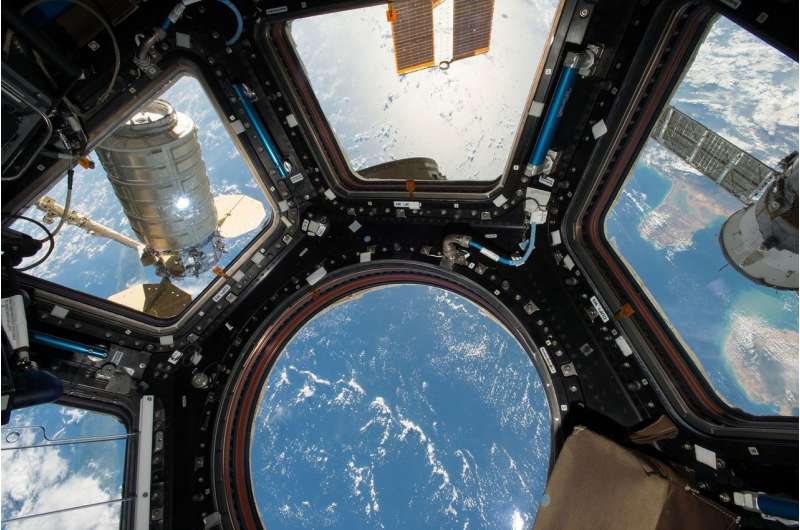
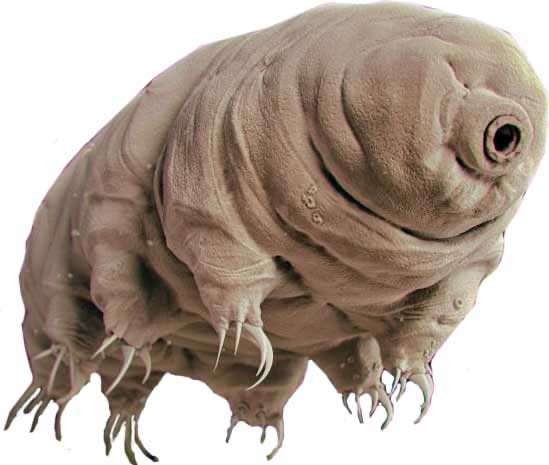
Some Earth organisms, such as tardigrades, are known to withstand the harsh conditions of space. (Source – X)

Scientists will be sending a batch of microscopic organisms into space in the hope that studies will help prepare astronauts for future interstellar travel.

The animals, called tardigrades, will accompany astronauts on the next Axiom Space multinational mission to the International Space Station and take part in what are known as the Voyager Experiments.

Scientists are hoping that studying tardigrades in space’s hostile environment will help unlock the mystery of how humans can survive and remain healthy on long-range missions to Mars and beyond.

The animals are also known as water bears or moss piglets because of the way they look under a microscope.

The US company Axiom Space, working with the Indian Space Research Organisation (ISRO), will conduct several experiments involving the water bears during the 14-day mission, due to start next month.

Tardigrades possess superpowers when it comes to surviving harsh conditions.

The animals can live for up to 60 years, survive for up to 30 years without food or water, and endure temperature extremes of up to 150 degrees Celsius, as well as the microgravity and elevated radiation levels of space.

Water bears survive extreme conditions by going into a state of suspended animation. They can dry up and survive for years without water and travel by being carried on the wind. When they do come into contact with water, they revive and continue their lives as though nothing happened.

By understanding how tardigrades protect and repair their DNA, scientists hope to find ways to safeguard astronauts during long space missions, where radiation levels are much higher than on Earth.

Tardigrades’ ability to enter suspended animation could inspire ways to preserve biological materials or even humans for extended space missions.

A spokesman for Axiom Space said: “The research seeks to identify molecular mechanisms of resilience, which have implications for understanding the limits of life in extreme environments.

“This knowledge could inform future space exploration and help develop biotechnology applications on Earth.”

Tardigrades are minute, segmented micro-animals with eight legs ending in claws or pads.

They were first identified in 1773 by German zoologist Johann August Ephraim Goeze, who called them kleiner Wasserbär, or “little water bear.”

The name Tardigrada, meaning “slow walker,” was later given in 1776 by Italian biologist Lazzaro Spallanzani.

The body, composed of roughly 1,000 cells, uses a haemocoel (fluid-filled body cavity) for circulation, lacking lungs, gills, or blood vessels. Instead, they rely on diffusion for gas exchange.

The Voyager Tardigrades experiment to be conducted on the ISS builds on earlier studies that have showcased the organisms’ remarkable hardiness in extraterrestrial environments.

Follow on Google News Follow on X (Twitter)
Share. Facebook Twitter Pinterest LinkedIn Tumblr Email
Staff Writer

Keep Reading

Britain urged to invest in the race for space

Russia targets UK’s military satellites – head of Space Command warns.

Axiom Space appoints former Google executive as new CEO

Bahrain successfully launches its first ever satellite

Urgent call for enhanced space rules and US-China-Russia diplomatic reset

Offer Putin “graceful exit” from Ukraine war

Editor's Picks

Ramaphosa’s Zimbabwe visit puts constitutional crisis, not succession, at centre of regional concern

May 12, 2026

UK sanctions Iranian targets in response to national security threats

May 12, 2026

White House formally adds offensive cyberattacks to US counterterrorism strategy

May 11, 2026

Whose money was in Ramaphosa’s sofa?

May 11, 2026

Trending

White House formally adds offensive cyberattacks to US counterterrorism strategy

Cyber May 11, 2026

Whose money was in Ramaphosa’s sofa?

South Africa May 11, 2026

Britain to create joint naval force with nine European countries as ‘complement’ to Nato

United Kingdom April 30, 2026
Facebook X (Twitter) TikTok Instagram LinkedIn
© 2026 National Security News. All Rights Reserved.
  • About us
  • Privacy Policy
  • Terms
  • Contact
Home Topics Podcast NSN Lists

Type above and press Enter to search. Press Esc to cancel.

Sign In or Register

Welcome Back!

Login to your account below.

Lost password?