

Listen to the article
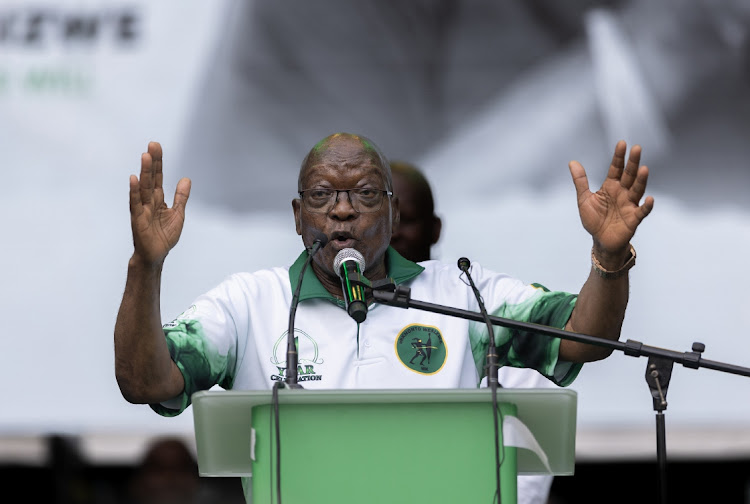
The growth of South Africa’s Umkhonto we Sizwe (MK) party, led by former President Jacob Zuma, is constrained by internal infighting, leadership disputes, Zuma’s tight grip on the party, and financial struggles, according to political analyst Prof. Theo Venter. In an interview with National Security News, Venter explained that the party’s strong focus on Zulu-speaking citizens limits its appeal, potentially capping its vote share at a “cultural ceiling” of 10-15 per cent. He drew parallels with the situation of former leader Mangosuthu Buthelezi, who faced similar limitations after 1994.
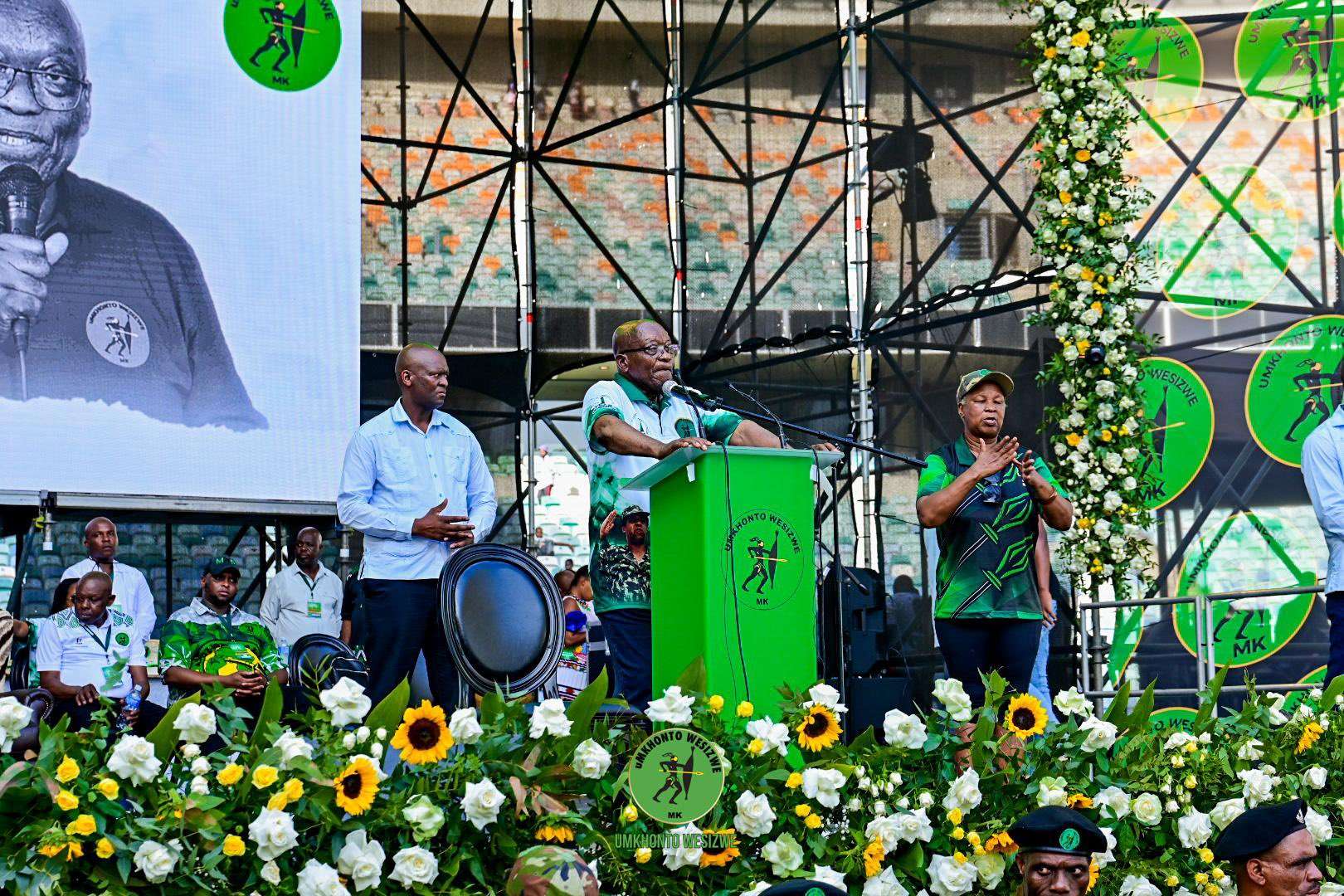
The MK Party’s first year that was celebrated earlier this week at the Moses Mabhida Stadium in Durban stadium has been fraught with internal turmoil, leadership disputes, and its members of Parliament include a rogue’s gallery of people who are accused of corruption.
The MK Party caused an upset in the May 2024 election in South Africa when it came from obscurity and emerged as a significant political force. The party won 14,58 per cent of the national vote, which translated into 58 seats in the National Assembly. The MK party drew significant support from the ANC, contributing to the ANC’s loss of its overall majority for the first time since 1994. The ANC’s vote share dropped to just over 40 per cent forcing it to go into a power share agreement or Government of National Unity with opposition parties.
MK Party’s election irregularity claims: A Trump-style narrative for constituents that will get nowhere
The MK Party continues to allege irregularities in the May elections, claiming these irregularities cost them victory. Having exhausted legal avenues in South Africa, they are now threatening to escalate their claims to an international court. However, Venter believes the MK Party is unlikely to gain much traction with this strategy.
He said that their claims echo the narrative pushed by President Donald Trump after the 2020 US presidential election, in which Joe Biden won decisively. Despite the lack of evidence, Trump’s repeated claims of electoral fraud resonated with his base and continued long after the election. Similarly, Zuma and Judge Hlophe are known for promoting conspiracy theories while withholding the so-called “facts.”
“Jacob Zuma is pushing a narrative that there were election irregularities, and his constituents are buying into it,” Venter said. “The real challenge isn’t on the international stage; it’s local. Once such a narrative takes hold and is repeated, it undermines the credibility of local elections and their outcomes.”
MK Party wants to be another party; remains a regional party, Zuma’s dominance
The MK Party, Venter said, is currently the only political party in South Africa that aspires to become another political party. “Their goal is to become the ANC. We are MK, but we really want to be the ANC,” he said.
Venter says the MK Party lacks internal cohesion and is essentially just following the directions of “the big boss.” He added that Zuma has changed the party’s leadership multiple times. “I think Floyd Shivambu, the current secretary-general—who is essentially the CEO or day-to-day manager of the party— is the sixth person to hold this position since the party’s formation in December 2023.”
While the MK Party has become the third-largest party in the country, Venter said it remains highly localised, with strong support in KwaZulu-Natal and some presence in Gauteng, but limited reach across the rest of the country.
EFF’s downward spiral, SACP going it alone won’t last
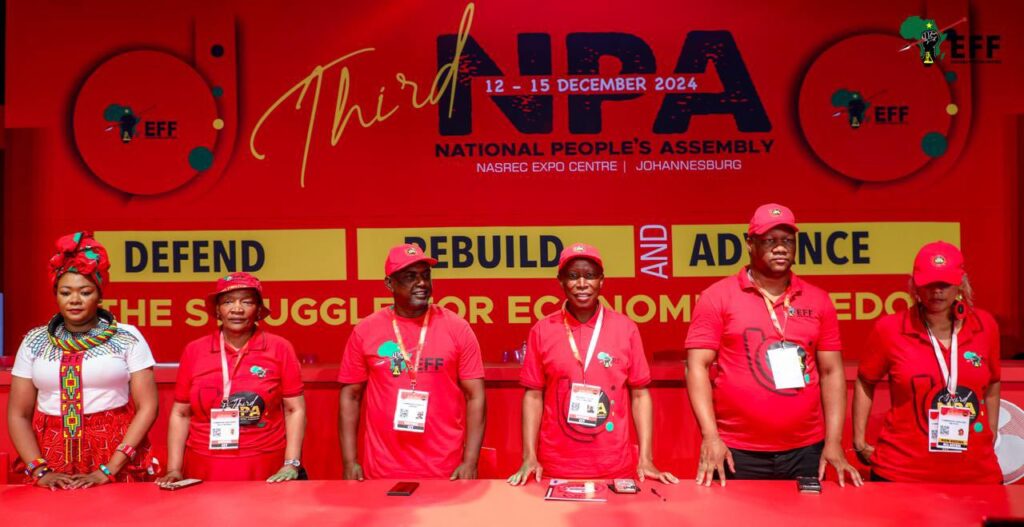
The Economic Freedom Fighters (EFF) re-elected Julius Malema as a leader for the third time. “They are having a huge battle to maintain the image of a major player in South African politics,” Venter said. He said some of the EFF’s most important strategists, including Shivambu and Dali Mpofu, have been stolen by the MK Party.
As for the South African Communist Party (SACP) Venter noted that while they have often threatened to break away from the ANC, they have failed to do so sustainably.
“After a lengthy speech by the SACP’s Secretary-General, Solly Mapaila, it became clear that they oppose the Government of National Unity, yet their ministers continue to serve in the cabinet. This reflects a certain ambivalence—an odd way of expressing their dissatisfaction.”
In the meantime, Venter said many South Africans are waiting to see whether the Government of National Unity can work, despite ongoing tensions and political manoeuvring.
