

Listen to the article
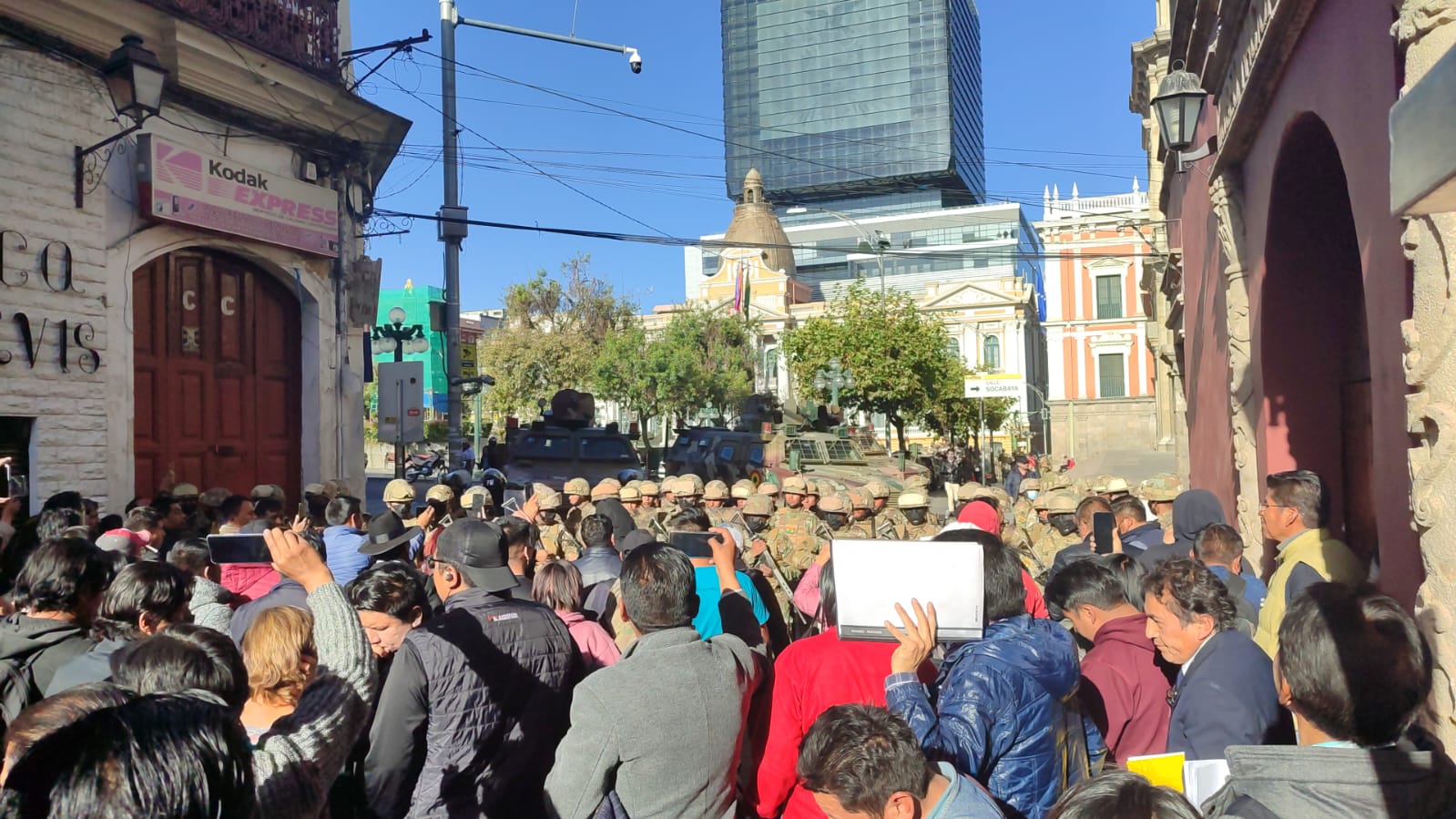
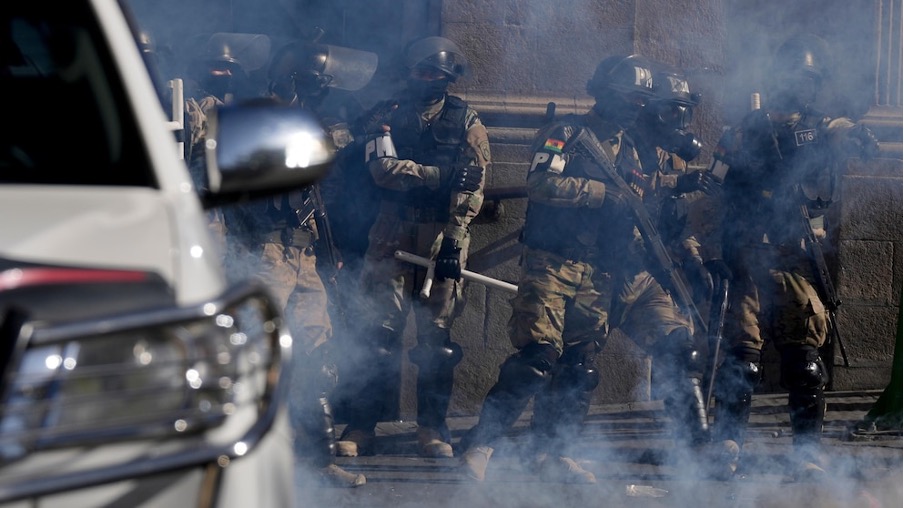
There are doubts about whether Bolivia’s recent coup d’état was genuine, but according to Dr. Christopher Sabatini, it actually boosted President Luis Arce’s popularity. Dr. Sabatini, a senior researcher at Chatham House, said that a positive outcome was the swift condemnation from foreign ministers at a meeting of the Organisation of American States in Asunción, Paraguay, who denounced the coup and expressed their support for President Arce. In an interview with National Security News, he described ‘old school’ coups like the one in Bolivia as less of a threat in the region than the creeping influence of military leaders in Latin American economies and crime.
Key quotes:
“There’s a military vehicle trying to ram down the gates of the presidential palace in a rather desultory manner, quite frankly. Then the general comes out and talks to the president. The president berates him, basically shakes his finger at him, and then he stands down. All this makes it look, first of all, anachronistic—like no coups like that occur anymore.”
“It looked very convenient, whether or not it was intended, but it certainly shored up his (President Arce’s) popularity. People poured into the streets; he stood up to this general, who then stood down. Now he has a bit of a honeymoon period because he supposedly thwarted a coup.”
“All the foreign ministers gathered in Asunción, Paraguay for the Organisation of American States General Assembly and the meeting declared the coup illegitimate and reinforced their commitment to democracy. Irrespective of who is behind it or what may happen, that’s an important signal.”
“There are other democratic problems in the hemisphere. For example, the creeping control of the military in places like Mexico or Bolivia, in which they’re assuming greater control over the economy, in which they’re assuming greater control over police. Those are concerns.”
“In Mexico, under AMLO, the leftist populist autocratic president, the military has been given more and more control over things like oil production, airports, ports, and customs. He even dissolved an incipient attempt to develop a national police force and passed those responsibilities onto the military. In cases like that, and in others, for example, in Ecuador, the military is assuming a greater role in security and has always had a significant role in the economy.”
“The risk is also that some of these countries become narco-states, essentially criminalised states. This is currently the challenge for the president of Ecuador, who is fighting against the deep entrenchment of criminal interests within the judiciary and the prison system.In these scenarios, criminal elements control significant parts of the state apparatus and have access to resources, primarily through narcotics. In Ecuador’s case, a large part of its security issues stems from cocaine exports to Europe and the UK.”
