

Listen to the article
The assassination of Hamas’s deputy political leader is a major strategic coup for Israel but his death could be the spark which ignites a wider regional conflict.
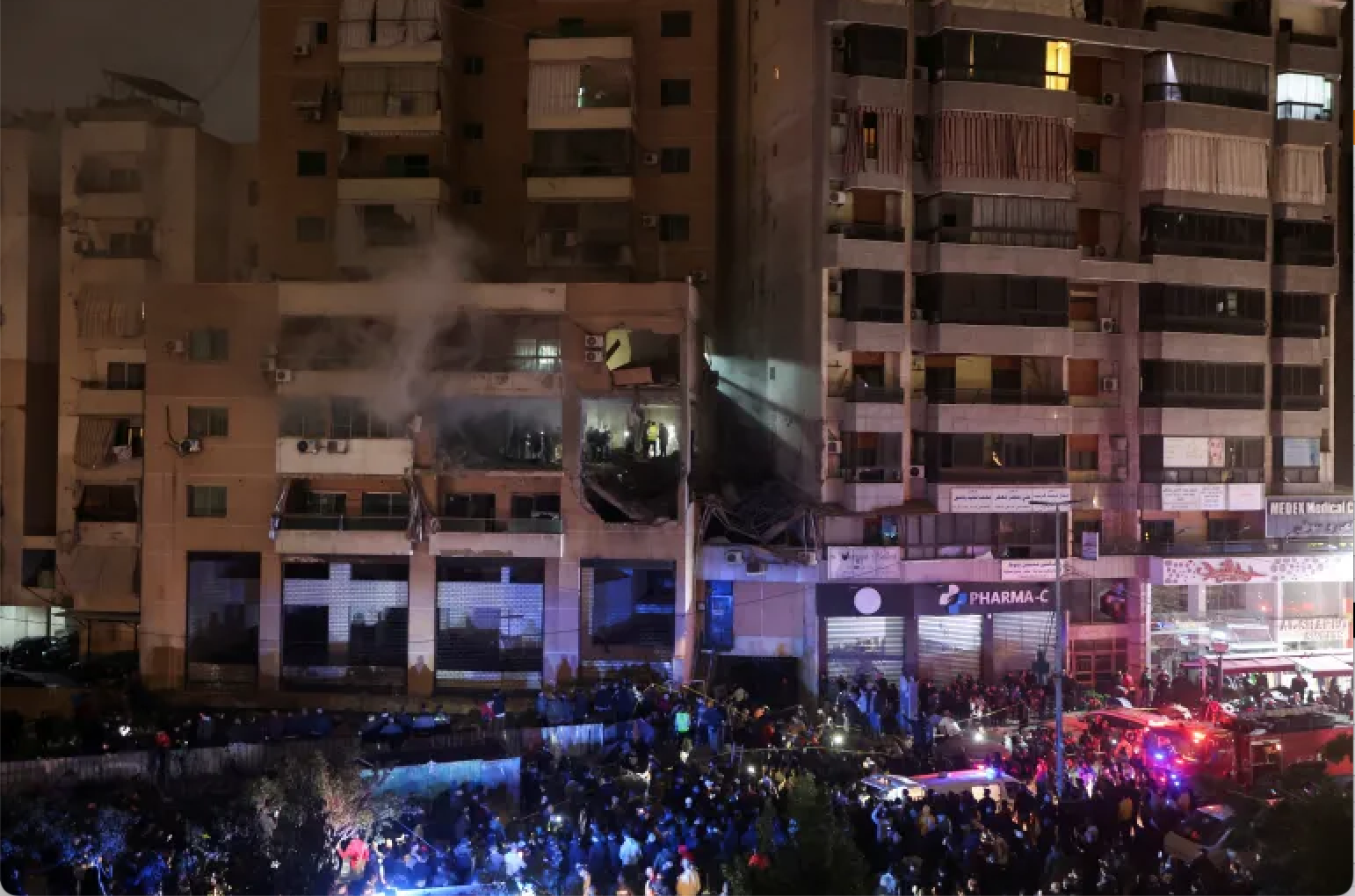
Saleh al-Arouri was killed in an apparent drone strike on Tuesday in the Beirut suburb of Dahiyeh – an area controlled by the Lebanese militant group Hezbollah and exiled leaders of Hamas and the Palestinian Islamic Jihad.
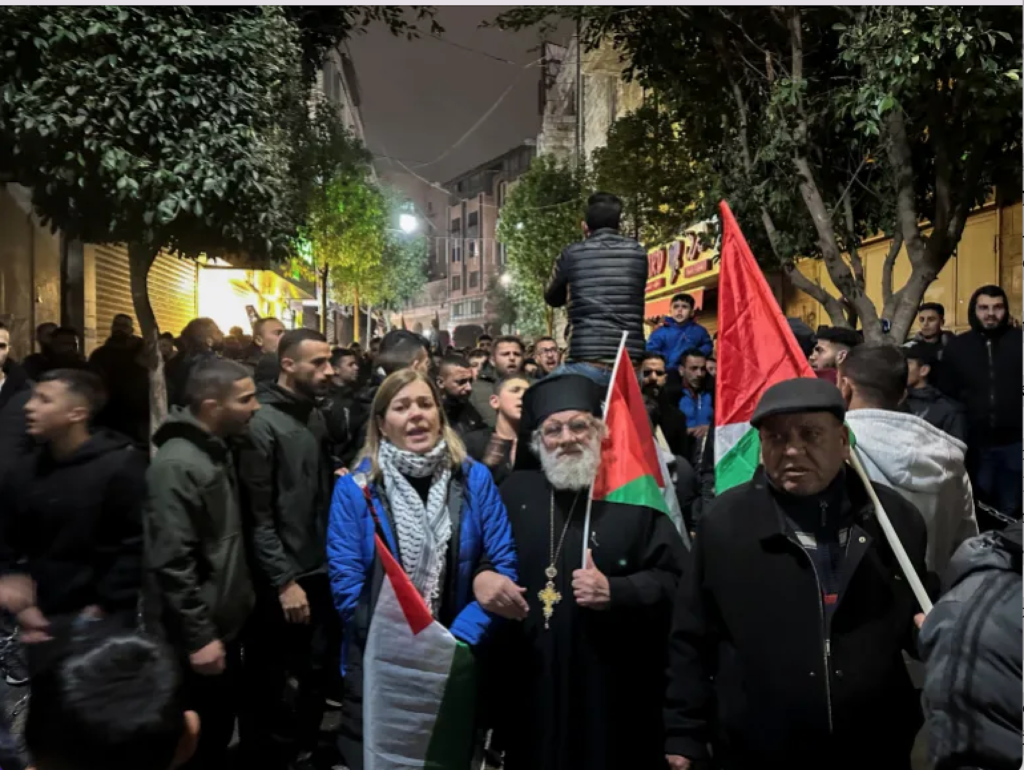
Shortly after Arouri’s death was confirmed, both Hezbollah and Hamas announced that they would seek revenge against Israel.
Iran also condemned the attack and claimed that Arouri’s assassination would further ignite resistance against Israel across the Middle East.
The first signs of a potentially wider conflagration emerged immediately after the drone strike when Hezbollah launched a series of retaliatory rocket attacks against Israeli Defence Forces (IDF) in Northern Israel. Missiles were also said to have been fired from Yemen, where Houthi rebels have been attacking ships in the Red Sea and causing severe disruption to vital international shipping lanes.
Cross border attacks between the IDF and Hezbollah have been taking place almost daily since the October 7th attacks last year which left 1,200 Israelis dead and thousands injured. But the fighting has so far been limited to rocket attacks and artillery strikes.
In a separate development, at least 103 people were killed and more than 140 wounded in Iran when two remote controlled bombs hidden inside two suitcases were detonated near the grave of the assassinated Iranian general Qassem Soleimani.
A deputy governor of Kerman province said that the incident, which happened during a ceremony to mark the fourth anniversary of Soleimani’s death at the hands of a US drone four years ago, was a “terrorist attack”.
Iran’s official IRNA news agency, citing an informed source, said that initial investigations indicated there were two explosive devices.
It was not clear who was behind the explosions and there were no immediate claims from any groups.
But Arab separatists, Islamic State (IS) and other Sunni jihadist groups have claimed to have carried out deadly attacks on security forces and Shia shrines in the country in recent years.
The attack means that there are now four major flashpoints in the Middle East with the others being Gaza, Yemen and Lebanon, all of which have the capability to spin out of control.
The assassination of Arouri is a significant gamble by the IDF because of the very real risk of drawing Hezbollah much further into the current conflict.
Hezbollah, which is an Iranian proxy force, poses a significantly greater threat than Hamas. It is composed of up to 100,000 trained fighters and has a weapons arsenal estimated to be composed of between 40,000 and up to 150,000 rockets, capable of hitting any target in Israel. It is also equipped with anti-ship and anti-tank rockets and has a well-established intelligence gathering network.
A conflict with Hezbollah will leave Israel in the strategically dubious position of fighting wars on two fronts – a military strategy that rarely ends well. It would also place the IDF under considerable strain and could also potentially see the involvement of US forces in the form of air strikes against targets in southern Lebanon conducted by combat jets from the carrier strike groups positioned in the region.
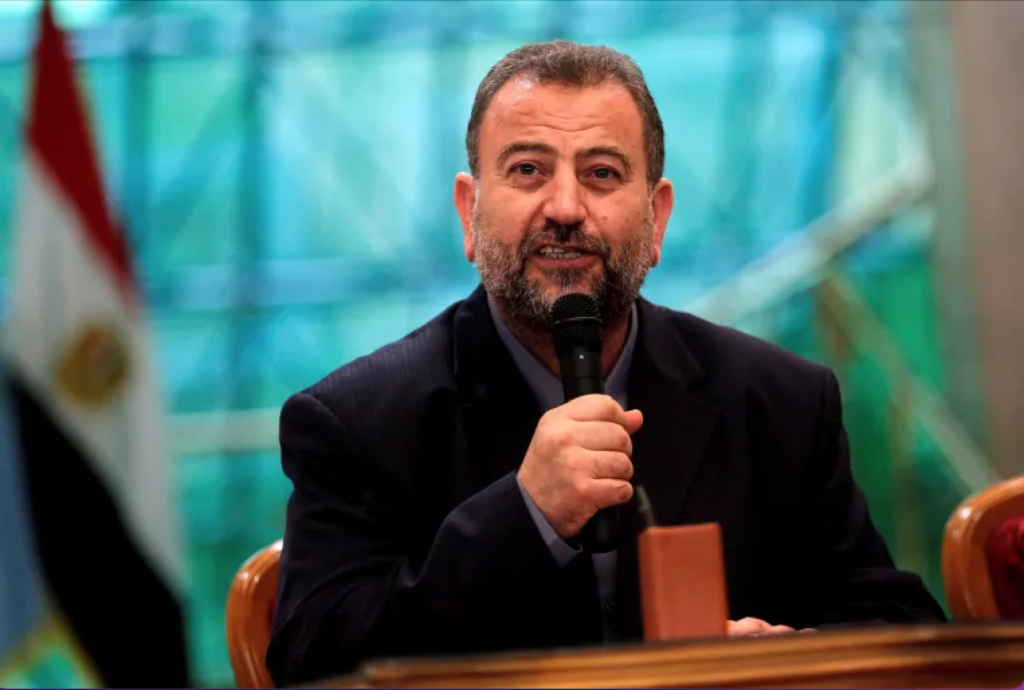
Arouri, 58, was the deputy of Hamas’s supreme political leader, Ismail Haniyeh, and considered by Israel as the group’s senior military leader outside Gaza. He is also believed to be the only leader in the organisation outside of the Gaza Strip who had prior knowledge of the October 7 attacks. In addition to his position as deputy chief of Hamas’s political wing, he was also operations commander for the West Bank in Hamas’s military wing.
Last August, Arouri said he was “waiting for martyrdom (death) and I think I have lived too long”, in reference to Israeli threats to eliminate Hamas leaders.
He had also been implicated in directing a number of attacks against Israel. In 2014 Israel accused him of being behind the kidnap and murder of three Israeli teenagers, which led to that year’s conflict in the coastal strip, and he was designated by the US for his role in terrorism in September 2015.
More recently he was blamed for a salvo of missiles fired from southern Lebanon against Israel last spring.
Arouri’s assassination is likely to complicate negotiations between Hamas and Israel over the hostages the militant group holds in Gaza, with the terrorist leader described as playing a key role in negotiations for the captives’ release.
Haniyeh denounced what he called a “terrorist act”, which he said violated Lebanese sovereignty and expanded Israel’s “circle of hostility”. He added that any group “whose leaders and founders fall as martyrs for the dignity of our people and our nation will never be defeated.”
Iran condemned the killing of Arouri by “the aggressive Zionist regime” and said it would further ignite resistance against Israel across the Middle East.
“The martyr’s blood will undoubtedly ignite another surge in the veins of resistance and the motivation to fight against the Zionist occupiers, not only in Palestine but also in the region and among all freedom-seekers worldwide,” Nasser Kanaani, the Iranian Foreign Ministry spokesman, said.
Hossein Amir-Abdollahian, Tehran’s foreign minister, called the attack “cowardly” and said it “proves that the Zionist regime has not achieved any of its goals after weeks of war crimes, genocide and destruction in Gaza and the West Bank, despite the direct support of the White House”.
An Israeli military spokesperson, R Adm Daniel Hagari, said Israeli forces were in a state of “high readiness” and prepared for any scenario after the killing of Arouri. Asked to confirm that Israel was behind the strike, Hagari told a media briefing, “we are focused on killing Hamas.”
Mark Regev, an adviser to the Israeli prime minister Benjamin Netanyahu, said in an interview with MSNBC that Israel “has not taken responsibility for this attack.”
“But whoever did it, it must be clear – this was not an attack on the Lebanese state,” he said. “Whoever did this did a surgical strike against the Hamas leadership”.
