


Listen to the article
Key Takeaways
🌐 Translate Article
📖 Read Along
💬 AI Assistant
Britain could become the first major Western power to radically reshape its armed forces for a new era of warfare and lead the transformation of NATO, one of America’s most celebrated generals has said.
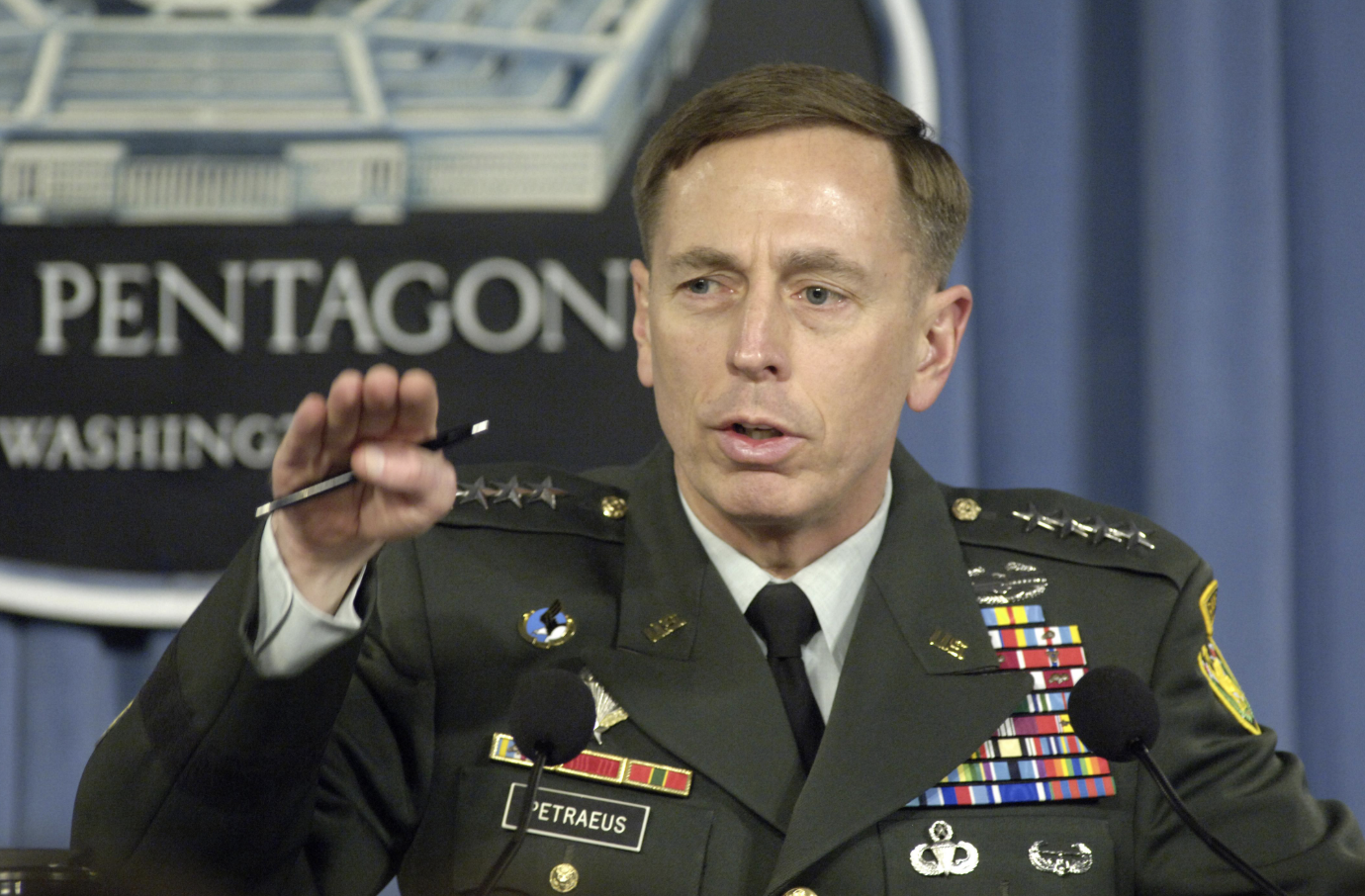
General David Petraeus, the former commander of coalition forces in Iraq and Afghanistan and ex-director of the CIA, said the war in Ukraine had fundamentally changed the way conflicts were fought and warned that Western militaries must adapt urgently.
He said Britain was “uniquely positioned” to lead that revolution after showing “strategic clarity” over Russia’s invasion of Ukraine.
But Petraeus warned that simply buying more advanced weapons, drones and artificial intelligence would not be enough. Armed forces would have to overhaul how they were organised, trained, equipped and commanded.
“The challenge before us … is to recognise that the concept of warfare is changing fundamentally, and that our institutions must change with it, urgently,” he said.
Delivering the Lord Speaker’s Lecture at the House of Lords, Petraeus said Britain’s early recognition of the threat posed by Russia and its subsequent support for Ukraine had put it in a position to lead a wider revolution in Western military thinking.
“That now presents Britain with another opportunity: to become the first major Western nation to organise its defence institutions around the new concept of warfare that Ukraine has been pioneering, and, in doing so, to help lead the transformation of Nato itself,” he said.
Petraeus described Ukraine as “the defining military laboratory of the twenty-first century”, where drones, artificial intelligence, electronic warfare, precision weapons, sensors and software are being combined in ways that are transforming the battlefield.
The war has demonstrated how relatively cheap unmanned aircraft can destroy tanks, artillery and other equipment worth millions of pounds, while surveillance drones have made it increasingly difficult for troops and vehicles to move without being detected.
Both Ukraine and Russia have also demonstrated an ability to modify weapons, software and tactics at extraordinary speed, sometimes adapting systems within weeks or even days in response to enemy countermeasures.
Petraeus said the important lesson from Ukraine was not simply the emergence of individual technologies but how they were being combined into an entirely new way of fighting.
“Much of the discussion has understandably focused on individual technologies — unmanned systems, artificial intelligence, electronic warfare, cyber capabilities, precision strike, battle management systems, and others,” he said.
“Each matters. But the principal lesson is larger: the very concept of warfare is changing.”
Britain’s Strategic Defence Review has already acknowledged that advances in technology are producing the greatest transformation in warfare for more than a century and called for the Armed Forces to adopt a “new way of war”. It also warned that forces which fail to change at the same pace as technology risk becoming obsolete.
Petraeus said Britain’s defence reforms, including greater investment in autonomous systems, artificial intelligence and electronic warfare, represented an important start.
But he warned that buying new equipment without fundamentally changing the institutions responsible for fighting wars would not be enough.
“The most consequential military transformations seldom begin with new equipment. They begin with new ideas,” he said.
“Additional resources will clearly be required in important areas, but the greatest obstacle to transformation is rarely money alone. More often, it is the difficulty of questioning long-established assumptions and overcoming institutional inertia.”
He said the United States faced the same challenge despite possessing perhaps the world’s most advanced defence technology.
America remained at the forefront of developments in artificial intelligence, autonomous weapons, software and advanced manufacturing, but Petraeus warned that the US military establishment had not adapted quickly enough to exploit them.
“The United States has not yet developed the revolutionary new concept of warfare this moment requires, much less begun the vast resulting changes in force structure, organisation, training, leader education, procurement, and personnel,” he said.
“Our challenge is therefore not principally one of technological innovation. It is one of transforming our military institutions rapidly enough to exploit that innovation.”
Petraeus said almost every aspect of the military establishment would have to be reconsidered, including the organisation of fighting units, the education of commanders, training, procurement, relations with industry and the recruitment of personnel with technological expertise.
The transformation would inevitably encounter resistance because it would threaten established military structures, industrial interests and procurement programmes.
“None of this will be easy,” he said.
“Political leaders will have to challenge long-established assumptions; military leaders will have to rethink organisations and force structures that have served successfully for generations; acquisition systems will have to operate at the pace of technological change; and industrial capacity, innovation, education, and national resilience will all have to be treated as elements of national security.”
Petraeus said NATO would also have to adapt, particularly the headquarters responsible for commanding alliance forces in Europe.
The alliance needed to develop a common understanding of how warfare was changing before individual nations could successfully reorganise their armed forces around it.
“The question is not whether this transformation will occur,” he said. “It is already underway — most visibly in Ukraine, but also in Russia, the Middle East, and elsewhere. The question is whether we will lead it — or be forced to catch up to those who do.”
Petraeus, 73, served for 37 years in the US military and became one of the best-known American commanders of the post-September 11 era.
He commanded coalition forces in Iraq during President George W Bush’s “surge” in 2007 and 2008, when additional American forces were deployed alongside a new counter-insurgency strategy.
He subsequently commanded US and NATO forces in Afghanistan in 2010 and 2011 before retiring from the military and becoming director of the CIA.
His address came after an invitation from Lord Forsyth of Drumlean, the Lord Speaker.
Lord Forsyth said: “David Petraeus has combined frontline military leadership with experience at the highest levels of intelligence and public service. At a time of international peril, his conclusions on the lessons he has learned are crucial to our future security.”
Among senior former British commanders expected to attend were Field Marshal Lord Richards, the former chief of the defence staff, whom Petraeus praised as “a superb coalition commander in Afghanistan”.
Lord Stirrup, who was chief of the defence staff during the Iraq surge, Lord Dannatt, the former head of the British Army, and Lord Peach, the former chief of the defence staff and chairman of NATO’s Military Committee, were also expected to attend.
Petraeus invoked the first Duke of Wellington, who defeated Napoleon at Waterloo in 1815, to argue that military success depended not simply upon battlefield courage but upon the willingness to rethink how wars should be fought.
“The legacy of the first Duke of Wellington reminds us that strategic success depends not only upon courage on the battlefield, but also upon the ability to rethink how wars are fought and how military institutions prepare for future conflicts,” he said.
The ninth Duke of Wellington is now a crossbench peer in the House of Lords.
Petraeus said the scale of the challenge confronting Western militaries meant this generation could not assume that incremental reform would be sufficient.
“Every generation is tempted to believe that its challenges are unprecedented. Occasionally, however, a generation is correct. I believe ours is such a generation,” he said.
He concluded by arguing that Britain and America still had the ability to dictate the direction in which warfare developed, rather than being forced to react to innovations pioneered by their enemies.
“If Britain once again demonstrates the strategic clarity it showed in recognising the implications of Russia’s aggression against Ukraine, and if the United States matches its extraordinary technological dynamism with equally determined institutional transformation, then I believe our two nations, together with our allies, can once again shape the future of warfare rather than simply respond to it.
“That is not merely an opportunity. It is the responsibility of our generation.”


