


Listen to the article
Key Takeaways
🌐 Translate Article
📖 Read Along
💬 AI Assistant

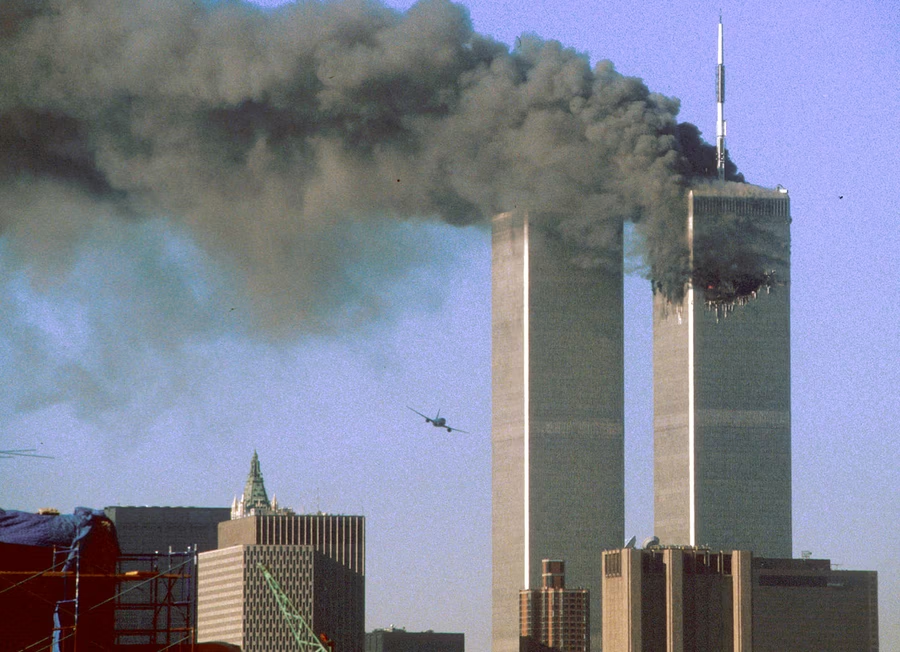
New evidence surrounding alleged Saudi links to the September 11 hijackers has intensified calls for the US government to release further classified material as families prepare to mark the 25th anniversary of the attacks.
Previously unseen video footage, court documents and evidence seized by British counter-terrorism officers have raised fresh questions about Omar al-Bayoumi, a Saudi national who assisted two of the hijackers after they arrived in California.
Bayoumi is a central figure in a $1 trillion (£733 billion) civil lawsuit brought by families of 9/11 victims against Saudi Arabia, which alleges the kingdom provided support to the men responsible for the attacks.
Saudi Arabia has consistently denied involvement in 9/11 and says allegations that it or its officials were complicit are false. Bayoumi has also denied being a Saudi intelligence agent or knowing the men he helped were al-Qaeda operatives.
However, material made public through the litigation has renewed scrutiny of those denials.
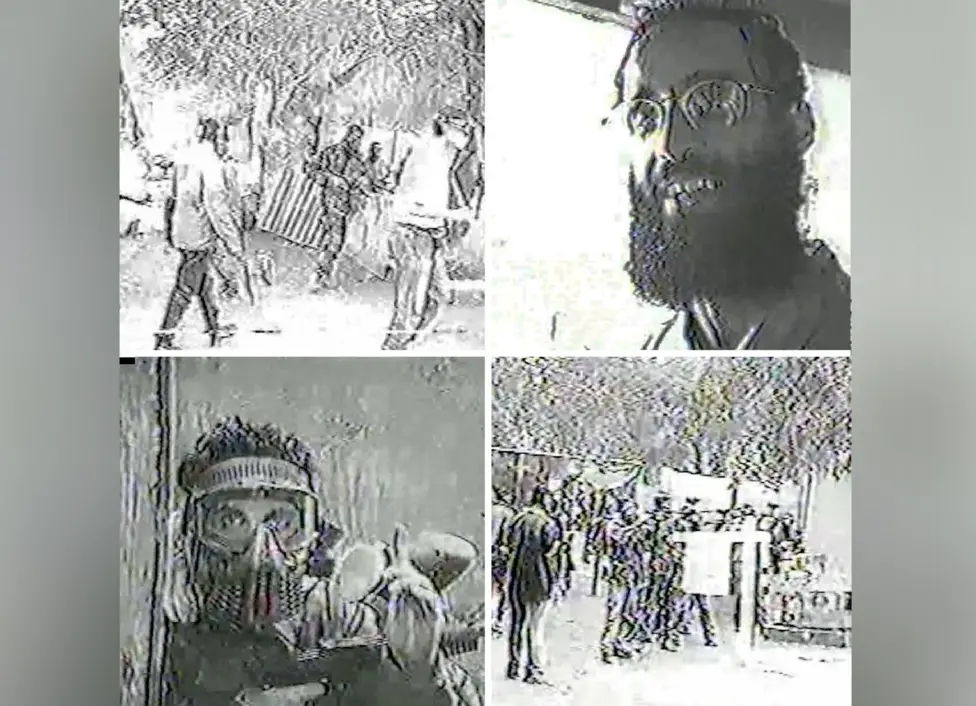
An investigation by BBC Panorama and Radio 4 found previously unseen footage showing Bayoumi with Anwar al-Awlaki, who later became a senior figure in al-Qaeda in the Arabian Peninsula.
One video, filmed near San Diego in 1997 or early 1998, shows Awlaki among a group of men taking part in paintball exercises involving urban combat scenarios and target practice. Some participants wore military clothing and men can be heard shouting “Allahu Akbar”.
Bayoumi can also be heard referring to Awlaki as “Sheikh Anwar”.
Another clip from January 1998 shows the two men embracing.

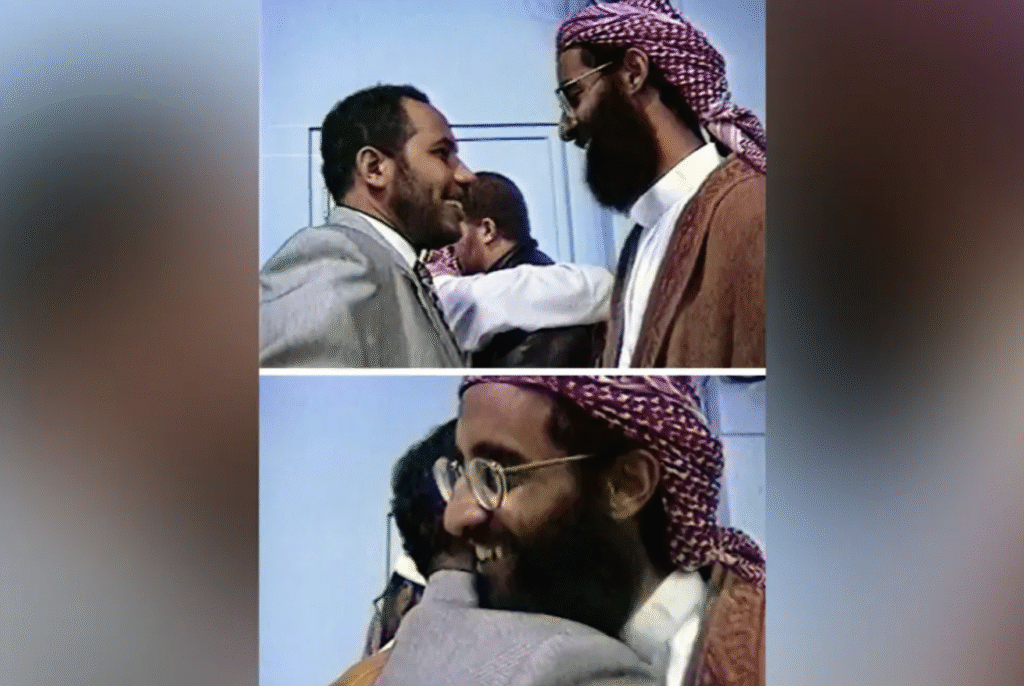
The footage is significant because Bayoumi said during questioning in the families’ lawsuit in 2021 that he had not met Awlaki. The video was later made available confidentially to the court and placed on the public docket this month.
The BBC investigation also found footage documenting Bayoumi’s contacts with officials and preachers connected to Saudi Arabia’s Ministry of Islamic Affairs.
The evidence has renewed scrutiny of his relationship with Nawaf al-Hazmi and Khalid al-Mihdhar, the first two 9/11 hijackers to enter the United States.
After the pair arrived in California in January 2000, Bayoumi helped them find accommodation in San Diego and assisted them financially. They later joined the team that hijacked American Airlines Flight 77 and crashed it into the Pentagon.
Families of those killed argue that Bayoumi’s assistance formed part of a Saudi-linked support network for the hijackers.
A US federal judge ruled in 2025 that their case against Saudi Arabia could proceed towards trial, rejecting an attempt by the kingdom to have it dismissed.
US District Judge George Daniels found that the evidence supported an inference that Bayoumi’s encounters with the hijackers were not simply chance meetings.
Among the material considered by the court was a handwritten aircraft diagram discovered at Bayoumi’s home in Birmingham following the attacks.

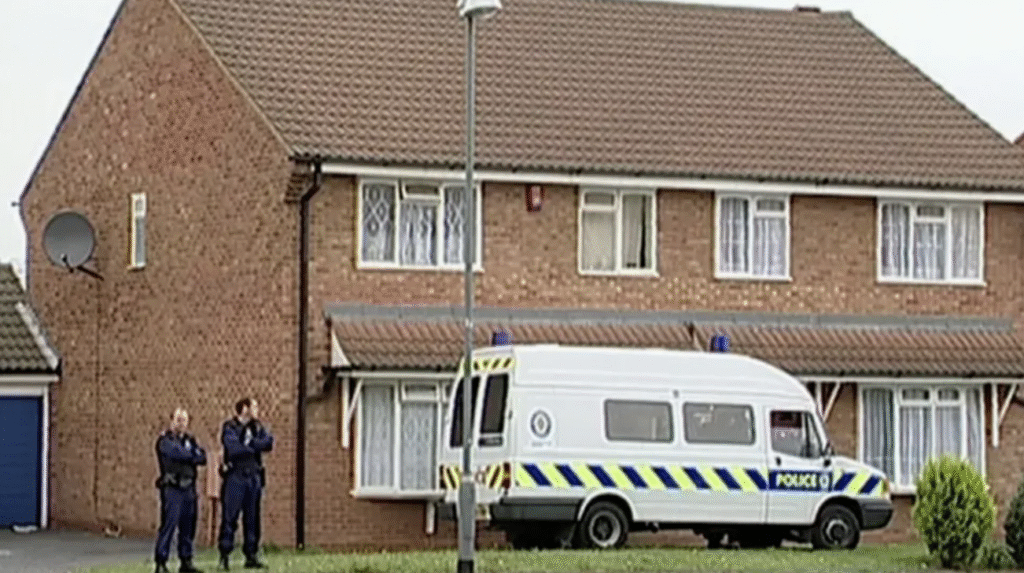
British counter-terrorism officers arrested Bayoumi on 21 September 2001 and recovered thousands of pages of documents, photographs, travel records and at least 80 videotapes.
One notebook contained a drawing of an aircraft alongside mathematical calculations relating to height, distance and flight path.
Jodi Westbrook Flowers, a lawyer representing the families, said: “When we figured out what it was, we knew that it was the smoking gun that we’d been looking for.”
Bayoumi acknowledged in a 2021 deposition that the writing was his but denied it was connected to the attacks.
Bayoumi said: “It’s an equation like any other equation.”
Saudi lawyers have argued that the page appears to relate to a school mathematics exercise.
However, Daniels said the drawing and equations, for which Bayoumi had not provided a reasonable explanation, “facially connects Bayoumi with knowledge of the 9/11 Attacks”.
Questions have also emerged over how the evidence was handled after British police recovered it.
Copies of the aircraft diagram were in the possession of the FBI and British counter-terrorism police while Bayoumi was being questioned at Paddington Green police station, but the British detectives interviewing him were never briefed to ask him about it.

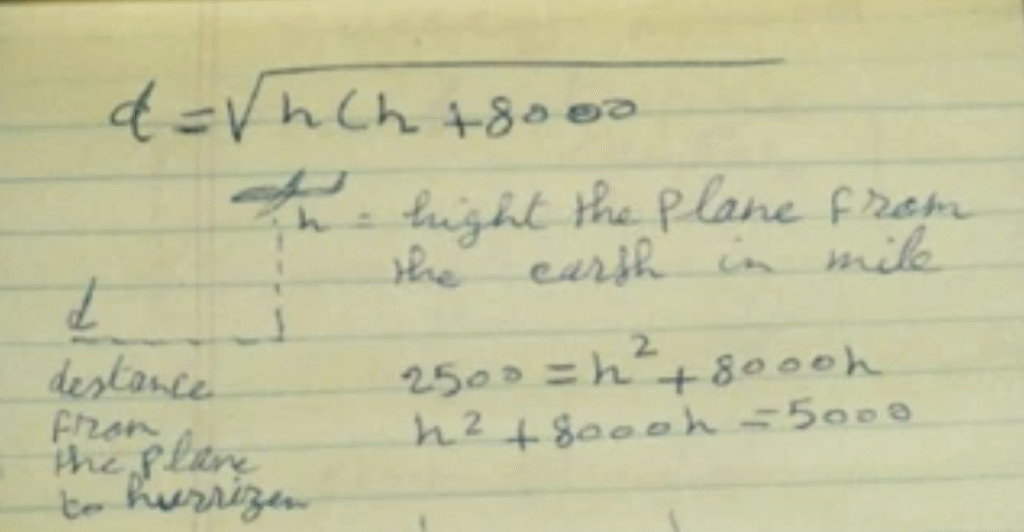
An investigation by the BBC found the diagram was later sent to the FBI’s New York office for analysis, but agents investigating Bayoumi in San Diego did not receive it.
Rick Lambert, who led the FBI investigation into Bayoumi in San Diego, said: “I believe there is the potential that had we received that evidence and analysed it, that we would have been able to put the pieces of the puzzle together much more quickly.”
Investigators in San Diego and Los Angeles also encountered obstacles when attempting to interview Saudi government contacts associated with Bayoumi.
Lambert said: “The answer came back, ‘no, you’re not going to do that’.”
Former FBI agent Steve Moore, who oversaw the bureau’s 9/11 investigation in Los Angeles, said: “We hit a roadblock so hard, I think we all had airbag burns.”
Much of the evidence recovered from Bayoumi was also unavailable to the 9/11 Commission, which concluded in 2004 that there was no evidence the Saudi government as an institution, or senior Saudi officials individually, funded al-Qaeda.
The BBC reported that the Commission did not see the aircraft diagram, paintball footage or other material subsequently cited by the families.
The newly released evidence comes as victims’ relatives intensify pressure on President Donald Trump to order the release of remaining US government records relating to the attacks.
Brett Eagleson, whose father Bruce was killed in the World Trade Center’s South Tower and who leads 9/11 Justice, has called for further FBI and intelligence material to be declassified.
Eagleson said: “We’ve seen him do it for the [President John F. Kennedy] files. Why not the 9/11 files?”
He added: “Now is the moment, 25 years later, to finally bring resolution, and the man that sits in the Oval Office has a historic and a tremendous opportunity to do it.”
A bipartisan group of New York lawmakers has also sought the release of records relating to Bayoumi and the hijackers, including material the families believe could clarify communications between Bayoumi, the attackers and their associates.
The Public Interest Declassification Board has also urged the administration to move forward with the release of high-priority 9/11 records ahead of the anniversary, while further records involving senior US officials remain under review.
Saudi Arabia continues to reject the allegations against it and disputes the families’ interpretation of the evidence.
The litigation has not established that senior Saudi leaders knew of the 9/11 plot. Daniels noted there was no evidence that officials at the highest levels of the Saudi government were likely to have known about the planned attacks.
But 25 years after 2,977 people were killed in New York, Washington and Pennsylvania, the newly released material has reopened questions about the assistance received by the hijackers, what US authorities knew about those contacts and why potentially significant evidence remained outside public view for more than two decades.
For the families still seeking answers, the anniversary has become not only an act of remembrance, but a renewed demand for disclosure.


