


Listen to the article
Key Takeaways
🌐 Translate Article
📖 Read Along
💬 AI Assistant
How an Argentine special prosecutor was killed on the eve of his testimony against the IRGC — and why the cover-up still matters
By Andre Pienaar
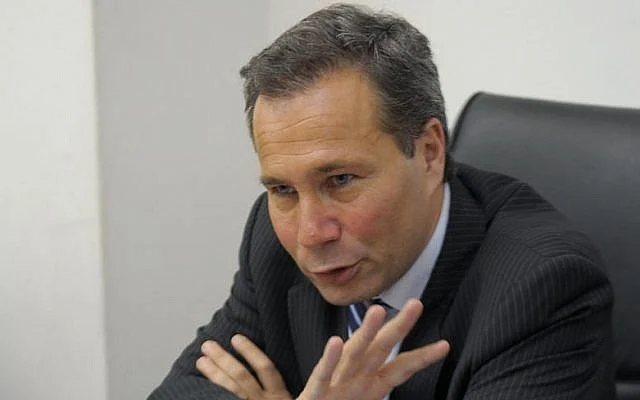
The case against Ahmad Vahidi, now Commander-in-Chief of the Islamic Revolutionary Guard Corps (IRGC), was built by one brave man over eleven years. His name was Alberto Nisman. He was killed in his Buenos Aires apartment on 18 January 2015, twelve hours before he was due to present that case to the Argentine Congress.
The decade that has passed since his death has produced a slow, difficult and contested judicial reversal, from an initial suicide finding to a formal homicide determination ratified successively by the National Gendarmerie in 2017, the Federal Court of Appeals in 2018, and the Public Prosecutor’s Office under Eduardo Taiano in January 2025. Argentina’s official position today is that its lead AMIA prosecutor was assassinated for his work on the case. No principal has ever been charged.
The killing of Alberto Nisman is the second-deadliest Iranian intelligence operation conducted on Argentine soil. The first was the AMIA bombing he was investigating.
The case Nisman built
The AMIA bombing was the deadliest terrorist attack in Argentine history. A car bomb was driven into one of the Jewish community’s most important social welfare centres on the morning of 18 July 1994. AMIA ran burial societies, schools, cultural programmes, social services and community archives for the Jewish community in Argentina, which at the time was the largest in Latin America. Eighty-five people died and more than three hundred were injured.
Alberto Nisman was appointed special prosecutor of the AMIA Investigation Unit in September 2004 by President Néstor Kirchner. The bombing was ten years old and had become synonymous with state failure. The first investigation had collapsed in 2004 amid evidence that the federal judge in charge had paid a witness $400,000; five Argentine police officers tried as the “local connection” had been acquitted; the perpetrators remained untouched.
In October 2006, Nisman and a fellow prosecutor formally accused the Iranian government of directing the attack and Hezbollah of executing it. The indictment named eight Iranian officials and one Lebanese national. Among them were Ali Akbar Hashemi Rafsanjani, former Intelligence Minister Ali Fallahijan, Hezbollah’s Imad Mughniyeh, and most importantly Brigadier General Ahmad Vahidi, then Quds Force commander. Interpol issued Red Notices against six of them in November 2007. Vahidi’s Red Notice has never been withdrawn.
In 2013, Nisman expanded his theory of the case in a 502-page indictment documenting, with primary-source evidence, the existence of an Iranian clandestine intelligence network across South America. He traced this network back to the same operational doctrine of civilian-fronted infrastructure that Vahidi had built during his Quds Force tenure: the cultural attaché Mohsen Rabbani in Buenos Aires; the Hezbollah financial node in the Tri-Border Area; and the diplomatic cover used to move money, operatives and explosive precursors. Nisman’s work was the most serious sovereign judicial investigation of Iranian state terrorism ever conducted in the Western Hemisphere. This investigation cost Nisman his life.
The cover-up
In January 2013, the Argentine government of Cristina Fernández de Kirchner signed a Memorandum of Understanding with Iran, ostensibly to “facilitate the investigation”. Its operative provisions were extraordinary: it created a joint commission with Iranian veto rights over the questioning of Iranian suspects, removed Argentine judicial primacy, and, Nisman would later allege, was conditioned on the lifting of the Interpol Red Notices against Vahidi and his co-conspirators in exchange for resumed Iran–Argentina trade in oil and grain and undocumented payments to third parties within the Argentine elite.
Nisman’s 14 January 2015 criminal complaint, all 300 pages of it, named the President, Foreign Minister Héctor Timerman, ruling-party deputy Andrés Larroque, and political organisers Luis D’Elía and Fernando Esteche. It rested on transcripts of intercepted communications between an Iranian intelligence asset in Buenos Aires and intermediaries linked to the Kirchner government. Whether or not the Interpol allegation was technically accurate, the Interpol Secretary-General disputed it on 15 January, the broader pattern of an Argentine government using the trade relationship to neuter the AMIA prosecution was already a matter of public record.
Nisman was scheduled to defend the complaint before the Criminal Legislation Committee of the Argentine Chamber of Deputies on Monday, 19 January 2015.
The killing
On the morning of Saturday 17 January, Nisman called his IT technician and confidant Diego Lagomarsino before dawn and told him he was afraid. He had received threats. He no longer trusted the ten-man police detail assigned to his protection. He had been warned, he said, by Antonio “Jaime” Stiusso, the recently dismissed senior officer of Argentina’s intelligence service who had run the original AMIA wiretaps, that he should treat his own custody as compromised. He asked Lagomarsino for a pistol “for the glove box”.
Lagomarsino brought him a Bersa .22 calibre pistol that evening. Building CCTV captured him entering and leaving. Nisman’s last documented conversation was a phone call with an Infobae journalist at 8.37 pm. On Sunday he did not answer his door. The Sunday newspapers were left untouched in the corridor outside his flat. His police detail had not been on station since Friday. On Monday morning his mother forced entry with a locksmith.
He was found in the bathroom, blocking the door from inside, with a single .22 calibre wound above the right ear and a bullet that did not exit the skull. The pistol Lagomarsino had brought was beside him.
The forensic case against suicide is now overwhelming and was already visible at the scene. There was no gunshot residue on his hands. There were no fingerprints on the weapon, not even Lagomarsino’s despite his handling of it hours earlier. A second person’s DNA was found on a coffee cup in the kitchen sink. Subsequent toxicology established the presence of ketamine, a sedative, in his system. The building’s CCTV had selective malfunctions across the relevant window. A locksmith later said he found a hidden service entrance, a passageway through the neighbouring flat housing the building’s air-conditioning units, already open when he arrived. A footprint and a fingerprint were found in that passageway. The trajectory of the wound was back-to-front, inconsistent with a self-inflicted shot.
The Kirchner government’s first public position was that the prosecutor had killed himself. Within four days the President reversed her position and suggested that Nisman had been “used and then killed”, a formulation that displaced responsibility towards the dismissed intelligence officer Stiusso while leaving the harder question untouched.
Ten years to establish a murder
The reversal of the official record took ten years. A private forensic investigation commissioned by the family in March 2015. The National Gendarmerie report of September 2017 concluding homicide. The Federal Court of Appeals ratification of June 2018, in which Judge Martín Irurzun wrote that “the direct physical evidence — the position of the body when it was found, the haematic projection of both hands, the absence of chemical particles compatible with deflagration — and subsequent expert examinations — forensic, technological and psychiatric-psychological — and the testimonies of the activity developed by the victim in the moments prior to the fatal outcome all provide evidentiary support that Natalio Alberto Nisman was murdered.” The Federal Chamber of Cassation’s 2023 reversal of the dismissal that had benefited Cristina Fernández de Kirchner, restoring her to trial. And finally, on the tenth anniversary in January 2025, the 56-page report from Federal Prosecutor’s Office No. 3 stating definitively that the killing was a homicide and that “his death was motivated by his work in the UFI-AMIA unit and, specifically, by his actions related to the Memorandum of Understanding with the Republic of Iran”.
The institutional record of the Argentine state is now clear. The lead prosecutor of the AMIA case was assassinated for prosecuting it and uncovering Iran’s clandestine networks across Latin America.
What has not happened, and may never happen, is the identification of the principals who ordered the killing. Lagomarsino is the only person charged in direct connection with the death itself, and only as a peripheral participant in the simulation of suicide. Four members of the police detail face dereliction-of-duty charges. The investigation has, as Judge Irurzun himself observed, narrowed prematurely towards the question of who gave the order while leaving the operational chain unexplored. The two hypotheses that remain open, domestic Argentine intelligence elements protecting the Memorandum, or Iranian intelligence assets working through the Rabbani network Nisman had documented, point in different political directions but converge on the same operational reality. Both required the involvement of a sophisticated state intelligence apparatus willing to kill a sitting senior prosecutor on Western soil to suppress sovereign testimony.
What it means now
Three observations follow, and they bear directly on the question of how the West should treat the Iranian regime as it stands today under Vahidi’s command.
The first is that the Islamic Republic has, on the available evidence, executed a successful intelligence operation on Western territory whose object was to prevent the formal sovereign indictment of a man who is now its most senior military commander. That is a more serious fact than is usually acknowledged. It is the behaviour of a terrorist organisation and it has gone unanswered for a decade.
The second is that Western governments are not innocent bystanders in this story. The Kirchner government’s Memorandum of Understanding with Iran was a deliberate political effort to subvert a counter-terrorism prosecution in pursuit of a deal. It failed only because Nisman refused to cooperate. The lesson is not that Iran is uniquely dangerous; the lesson is that Iran can be unusually effective when it identifies counterparts in Western governments who are biddable and buyable. The pattern is not historical. It is a present-tense risk in every Western capital where Iranian corruption is currently active.
The third is that Argentina’s reactivation of the AMIA prosecution, federal prosecutor Sebastián Basso’s March 2026 application to charge ten further suspects under the new trial-in-absentia framework, Cristina Fernández de Kirchner’s pending trial for the cover-up Nisman exposed, and the formal homicide finding now anchored in the institutional record, has created the first real prospect in thirty years of a foreign sovereign judicial conviction against the sitting commander of the Islamic Revolutionary Guard Corps (IRGC) for a mass-casualty terrorist operation, and against his patrons in Tehran for the murder of the Western prosecutor who was about to convict him.
That conviction, when it comes, will not be a procedural detail. It will be the formal closure of the case Nisman lost his life to build. It will also be the strongest available foundation for the civil and commercial accountability mechanisms under the Anti-Terrorism Act, the Justice Against Sponsors of Terrorism Act, and the broader law of state-sponsor designation through which the United States and its allies can finally translate Vahidi’s record into consequences for the regime and its affiliates he now commands.
Alberto Nisman built that case for eleven years. He was killed for it on the night before he was to deliver it. Leaders in the West now need to bring to justice those responsible for his terrorism and murder.


