


Listen to the article
Key Takeaways
🌐 Translate Article
📖 Read Along
💬 AI Assistant
Why we built Collective Defence to protect the innocent civilians the new wars are designed to kill.
By Andre Pienaar
A few hundred dollars. That is roughly the cost of the first-person-view drone now used to hunt human beings street by street. A Shahed loitering munition costs a little more, but not much, and it can fly hundreds of kilometres before destroying a substation, a hospital, or a block of flats where families are asleep.
This is the central, brutal fact of contemporary conflict: the price of taking a life has collapsed, while the cost of protecting one has not.
That asymmetry is not an abstraction. It is the reason power goes out across a city in the depths of winter. It is the reason a maternity ward loses its generators. It is the reason a child in Kyiv, Abu Dhabi, or Tel Aviv learns to recognise and fear the sound of an engine in the sky.
I have spent my career focused on the security of the West and her allies. Right now, the gravest danger of this moment is that our homelands and allies lack sovereign skies. We lack the means to defend civilians successfully against flying weapons that are cheap, numerous, and increasingly intelligent.
We are building Collective Defence to protect civilians from these weapons and secure sovereign skies. We want people to be able to look to the sky without fear.
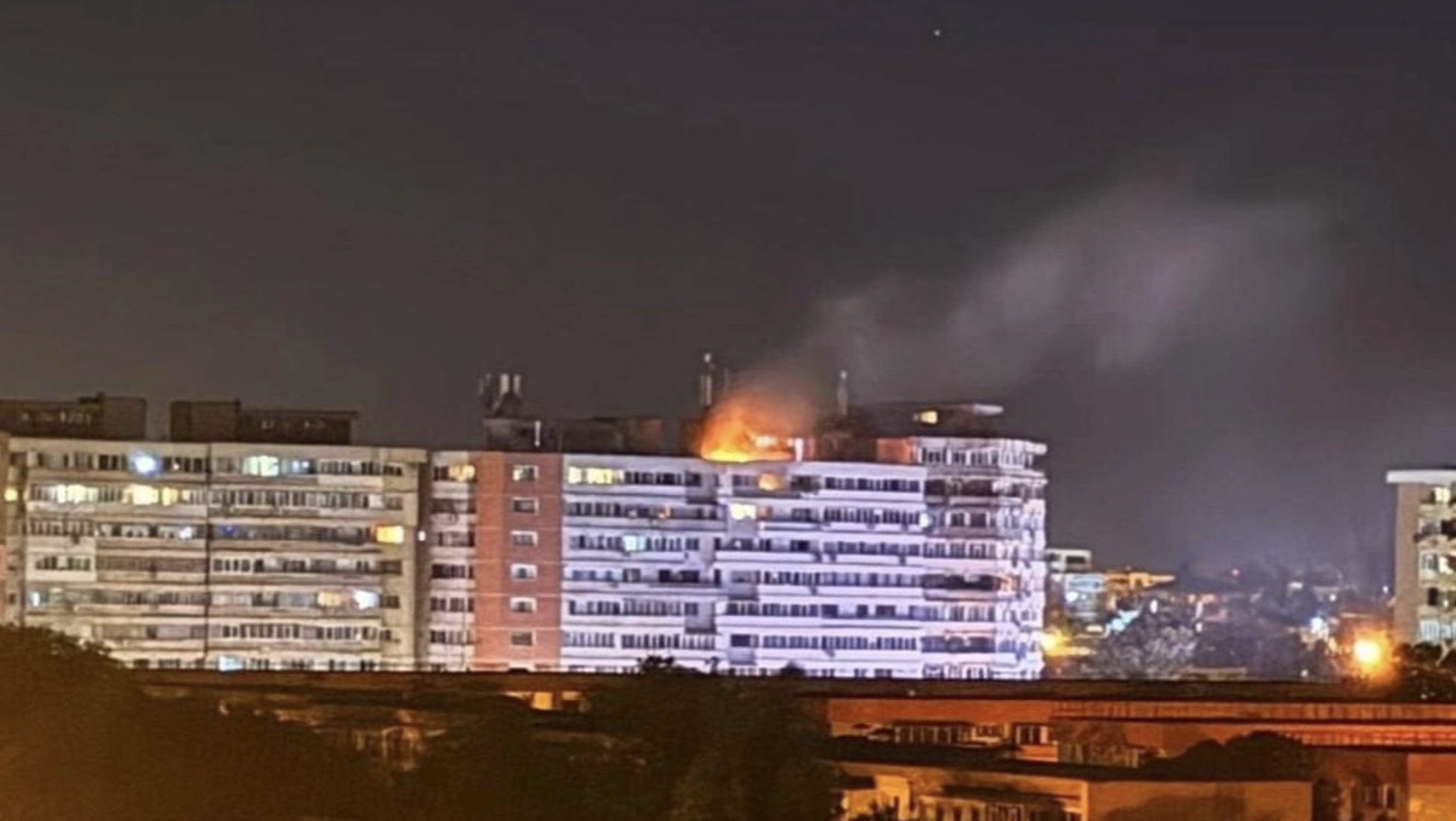
The instinct to think of this as purely a military problem misses what is really happening. The drones reshaping warfare are not primarily aimed at front-line soldiers. They are aimed at the things civilian life depends on: the power grid, the water system, the heating plant, schools, hospitals, and apartment buildings.
The Iranian-designed Shahed-series munitions deployed against Ukraine were not designed to win battles. They were designed to break the resilience of a population by making ordinary life unliveable. When you target the grid in January in Ukraine, you are targeting the conditions people need to survive. That is the opportunity the enemy is exploiting with ruthless intent.
This is why the United Nations reported that civilian casualties increased by 21 per cent in Ukraine in the first months of 2026.
Defending successfully against this drone threat requires understanding what these weapons actually are. A modern drone is a flying computer. It is commanded, navigated, and updated through software, communications links, and machine-learning models. Every one of those is a line of code, and every line of code is a surface that can be detected, deceived, disrupted, or defeated.
This insight lies at the heart of Collective Defence, and it is why we have brought together two capabilities the market has always treated as separate. Our cyber operations, including threat intelligence, network defence, and round-the-clock monitoring built on ITC Secure and IronNet, now sit alongside Asterion’s combat-proven counter-drone systems. One side of the company understands the software that guides the threat. The other finds it in the sky and brings it down.
The reason for fusing cyber with counter-drone capabilities is simple. Families in an apartment block do not face a cyber threat and a kinetic threat as two separate categories. They face one enemy weapon. The substation that keeps their lights on can be knocked out by a drone strike or by a line of malicious code, and increasingly by both in the same coordinated attack.
Treating airspace defence and cyber defence as different departments, run by different vendors and watching different screens, is how vulnerabilities emerge. A single operating picture, where the cyber signal and the radar track resolve into one coherent view, can mean the difference between warning and protecting a civilian community in time, or failing to do so.
I want to be clear about why the C5 team has put its conviction and capital here. We invest and build because the defence of our homeland and allies now depends on the pace of private-sector innovation. We also do so from a conviction that protecting civilians and defending one’s community is a duty as much as it is a strategic necessity.
Governments cannot build at the speed the rapidly evolving threat demands. The character of war has changed faster than procurement systems can follow. The people paying the price for that delay are innocent civilians.
Only private capital, applied with strategic urgency, a clear mission, and resilience, can move at the speed this threat demands. That is the gap we exist to fill as we help secure sovereign skies for our homeland and allies.
There is also the question of where we build these capabilities. By anchoring Collective Defence in Luxembourg, a founding member of NATO and home to the alliance’s procurement agency, as well as a global centre for private capital and innovation, we recognise the importance of allied cooperation and collective defence.
None of this would mean anything if it had not been tested where it matters most: in the defence of our allies’ skies. Asterion’s systems have been proven in Ukraine and across the Gulf against the weapons defining today’s threat, including Shaheds and FPV drones. This operational record carries a credibility no laboratory can confer. It was earned alongside ordinary people defending their homes and communities, and those who understand that protecting the innocent is among the oldest responsibilities we carry.
The headlines will measure this company in billions of dollars and call it a milestone for European industry. We are proud of the value we continue to create for our investors, but the ultimate measure is human.
It is the apartment block still standing in the morning. It is the hospital that keeps its power through the winter. It is the data centre that keeps families connected to loved ones. It is the family that sleeps safely through the night because a threat was detected and stopped before harm could be done.
This is our work and our mission, guided by an ancient warrior code: that strength carries a responsibility to protect the innocent. That is why the C5 team builds and invests, often against the odds. In a world where killing is becoming cheaper for tyrants and terrorists, building the means to protect the innocent is one of the most worthwhile things we can do.


