Listen to the article
Key Takeaways
🌐 Translate Article
📖 Read Along
💬 AI Assistant
By Ben Farmer
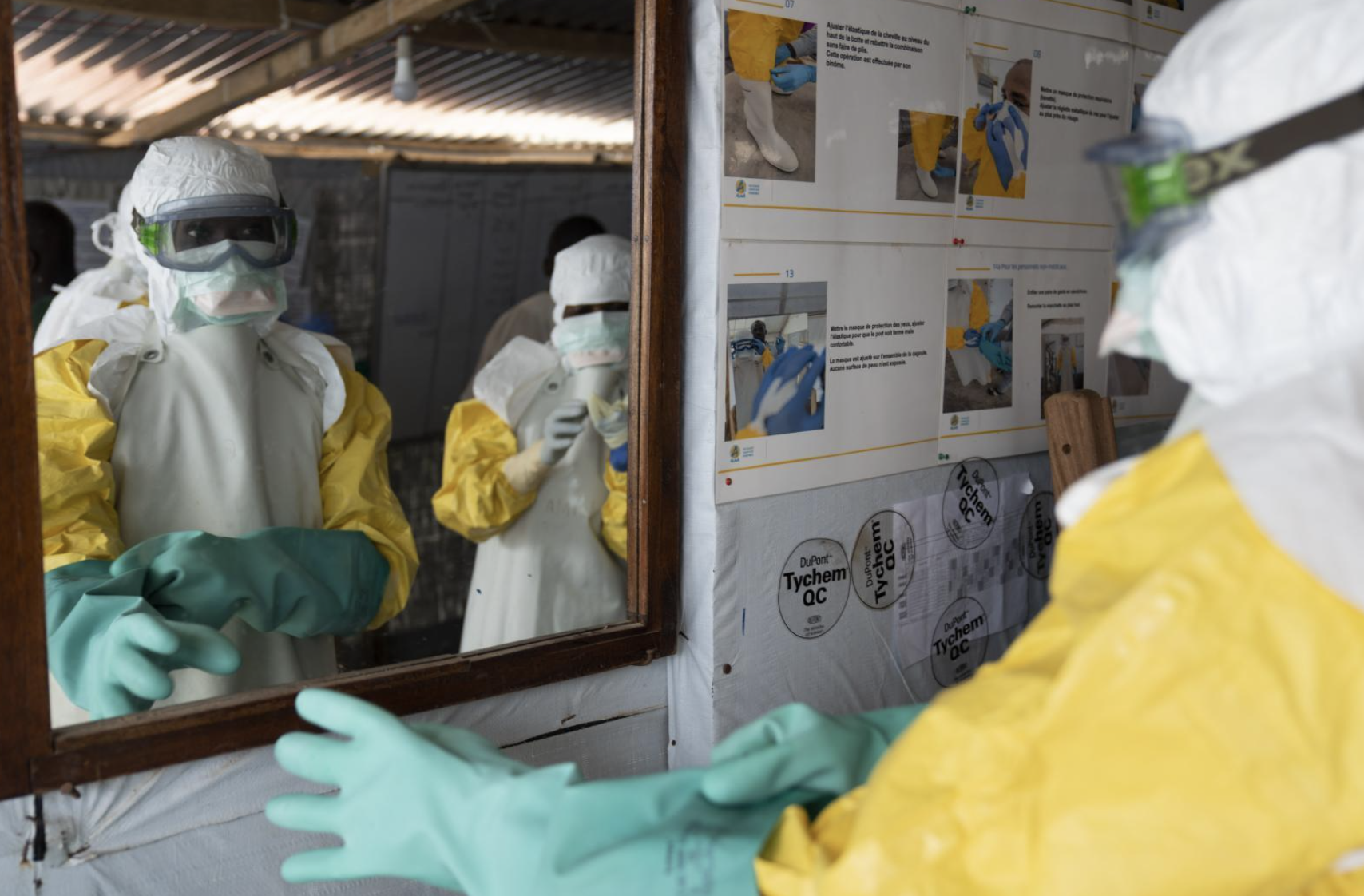
The escalating Ebola virus outbreak in the Democratic Republic of Congo (DRC) could last for months, health officials have warned, with a vaccine still some way off.
Scientists say a rare strain of the deadly haemorrhagic fever had been spreading undetected for weeks before a growing outbreak was finally confirmed on 15 May.
The delay is thought to have allowed extensive spread and, only a week later, the outbreak had already become the third largest on record, with 177 suspected deaths out of 750 suspected cases, according to the World Health Organisation (WHO).
Those figures are thought to be a significant undercount because of a lack of testing.
WHO officials have said they expect it will take months to stamp out the highly contagious disease.
There is a high risk of the infection spreading to neighbouring East African countries, with at least one case already confirmed in Uganda, while Rwanda has closed its border as a precaution.
While public health officials judge the risk of it spreading further afield to be much lower, America has already banned travellers from DRC, Uganda and South Sudan, while India has postponed a summit of African leaders.
The outbreak is being caused by the rare Bundibugyo strain, rather than the Zaire strain, which caused 15 of DRC’s previous 17 outbreaks since 1976.
There are no approved vaccines for Bundibugyo, and a lack of testing kits meant medics were unable to confirm Ebola infections when people first started falling ill in mid-April.
Ariel Kestens, International Red Cross chief in Kinshasa, said: “The Bundibugyo strain is particularly concerning, as there is limited evidence on the effectiveness of treatments and vaccines developed for the Zaire strain.
“The outbreak is spreading rapidly in areas where health systems are already fragile and where population movement across borders is frequent.”
Bundibugyo is slightly less deadly than the Zaire strain, but can still kill 40 to 50 per cent of those it infects.
Dedicated vaccines for Bundibugyo could take up to nine months to develop.
Fruit bats act as a natural reservoir for the Ebola virus, which can jump to people who eat them as bushmeat or come into close contact with infected saliva or bodily fluids.
Once in humans, the disease spreads through contact with bodily fluids, and relatives or medics exposed to blood or vomit while caring for the sick are particularly vulnerable to infection.
Symptoms begin with flu-like signs including fever, fatigue, headache, muscle pain, sore throat, vomiting and diarrhoea, before progressing to internal and external bleeding, organ failure and death in severe cases.
Relief efforts in the Ituri region, the epicentre of the outbreak, are being undermined by civil strife, where several armed groups hold sway.
Jervin Naidoo, a political analyst with Oxford Economics, said: “The ongoing conflict in eastern DRC will complicate efforts to contain the Ebola virus, as authorities attempt to manage a health emergency within an active conflict zone.
“The combination of instability in eastern DRC and an Ebola outbreak creates a dangerous mix for the region and risks further exacerbating insecurity, humanitarian pressures and economic strain.”